

Muscles that are working are using more glucose than those that are resting. While this may be an obvious statement, it also follows that exercise helps with blood sugar control. This is why people with diabetes are encouraged to exercise regularly. Exercise leads to better blood sugar control. Another benefit is a reduced risk of cardiovascular disease. So, what sort of exercise should you be looking at?
Bear in mind that exercise comes in two kinds – aerobic exercise and weight training. This does not mean you have to run a four-minute mile. Nor does it mean that you have to train as if you were going to take part in an Olympic weightlifting trial. So, unless that really is something you really want to go for, don’t overdo it.
On the other hand, don’t underdo it either. My suggestion would be to make modest, achievable goals, such as walking at least 5,000 steps a day. And when you have achieved that, increase your goal to, say, 10,000 steps until you are feeling healthy. Many websites recommend at least that many steps a day. Here is a website that gives advice on How Much Walking You Need to Lose Weight.
As for weight training, this can be as simple as carrying a bottle of water with you on your walk, and just take occasional sips from it. Better yet, why not take up a hobby that needs you to move. How about gardening, for example? People rarely think of DIY tasks around the house and yard as exercise? Or getting the vacuum out and using it every day? Follow this link for some additional ideas for exercise around the home.
Please note that the content presented here is for your information only. It is not a substitute for professional medical advice, and it should not be used to diagnose or treat a health problem or disease.



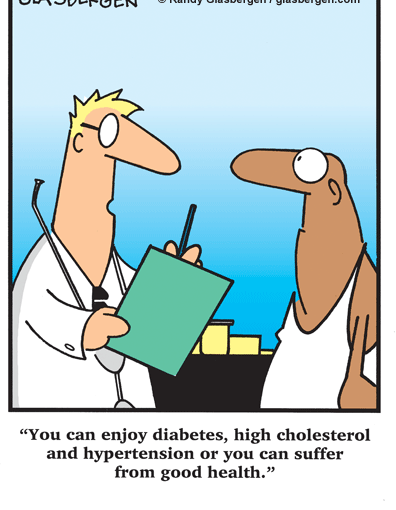
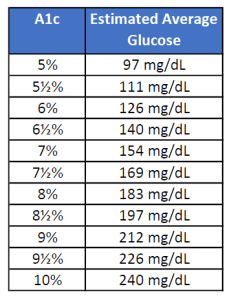 Think of yourself as a person with diabetes, not as a diabetic. View having diabetes the same way that you would view a sight defect. By and large, your eyesight can be corrected. Of course, you my have to wear glasses or contact lenses, but it is not going to define your life regardless of the fact that it is part of it. Think of diabetes in the same way. Taking your blood sugar level on a regular basis should be no more inconvenient than keeping your glasses clean. High A1c level? Work out a plan to get it lower again. After all, eating healthy should be the aim of everybody.
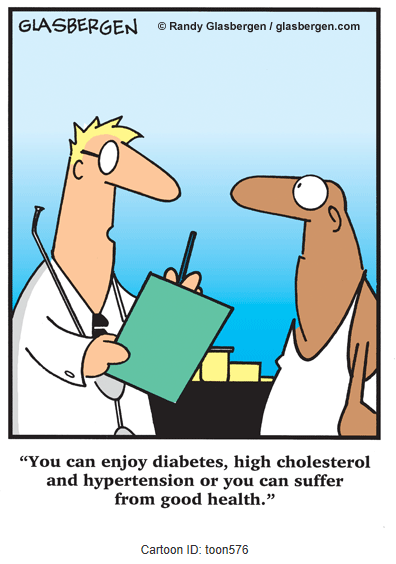 short-term. For example, if you have only recently been diagnosed, taking your meds on time, and checking your blood sugar when you should, may be sufficient. If you know you need to lose weight, make a realistic goal of losing 5 pounds every month rather than a much more daunting like losing 60 pounds over the year. This cartoon from
 mushrooms are one of my favorite veggies may mean my opinion is not entirely unbiased. This recipe is for one person, so double the quantities for two. I prefer to get the egg mixture ready before I start so that I can add it to the pan as soon as I remove the veggies, mainly because I do like my omelets to be hot rather than lukewarm, and definitely not rubbery.
 you when going through airport security. make sure the letter states your need to carry insulin, syringes, test strips, and any other supplies you may need. Along the same lines, make sure that you carry pill bottles and insulin vials which include pharmacy labels. This is not essential, but can avoid a lot of questions. Not that you would have anything to hide, but air travel is stressful enough as it is, so any way of reducing the stress should be looked for.
 than your eyes? Well, maybe a few things, like your heart and lungs, but can you imagine what your life would be like without your sight? Of all the various side-effects of diabetes, nerve pain (or diabetic neuropathy) is one of the more well-known, but did you know that it can also affect your eyes? This, of course, raises the subject of how often you should visit the eye doctor, and what questions you need to ask when you do go. There is every reason to go to the eye doctor if you are diabetic, regardless of whether or not you currently have perfect vision. In order to help protect your sight, learn the dangers and how to address them. Possible vision problems include

 example, you are less likely to allow yourself to slide on the little things because you know that others will be watching. Nowhere is this more true than in the family, and you will want your spouse and children to be able to look up to you and rely on you to do what you say you will do. Especially, do not try to hide your diabetes. The fact is, managing your diabetes affects so many aspects of your life that you cannot go it alone. For example, you need to eat healthy foods, but you are not going to be able to do that without the cooperation of everybody who lives under your roof. And besides, the healthy lifestyle changes you need to make will benefit all of you. Try these tips:

 foods, regardless of how good you usually are. This is especially true of the trip from home to the vacation and the trip back as well. If you have diabetes, it is not a matter of simply packing some clothes and jumping in the car. The road trip itself has a host of possible pitfalls. Such hazards, of course, are not unique to diabetics – boredom, for example – but the side-effects of low blood sugar (hypoglycemia) certainly need to be guarded against. Try these tips:
 danger of coming apart as you eat, especially if you are doing the driving and are eating one-handed. As an alternative, make a wrap sandwich by placing a thin layer of ingredients (does chicken breast, spinach leaves, red onion and mayonnaise sound good?) on a tortilla and then rolling it up. As another alternative, place similar ingredients into a pita bread pocket. When you need to eat, even if it is one-handed, the result will not be a mess in your lap.
 Tim's Diabetes Blog